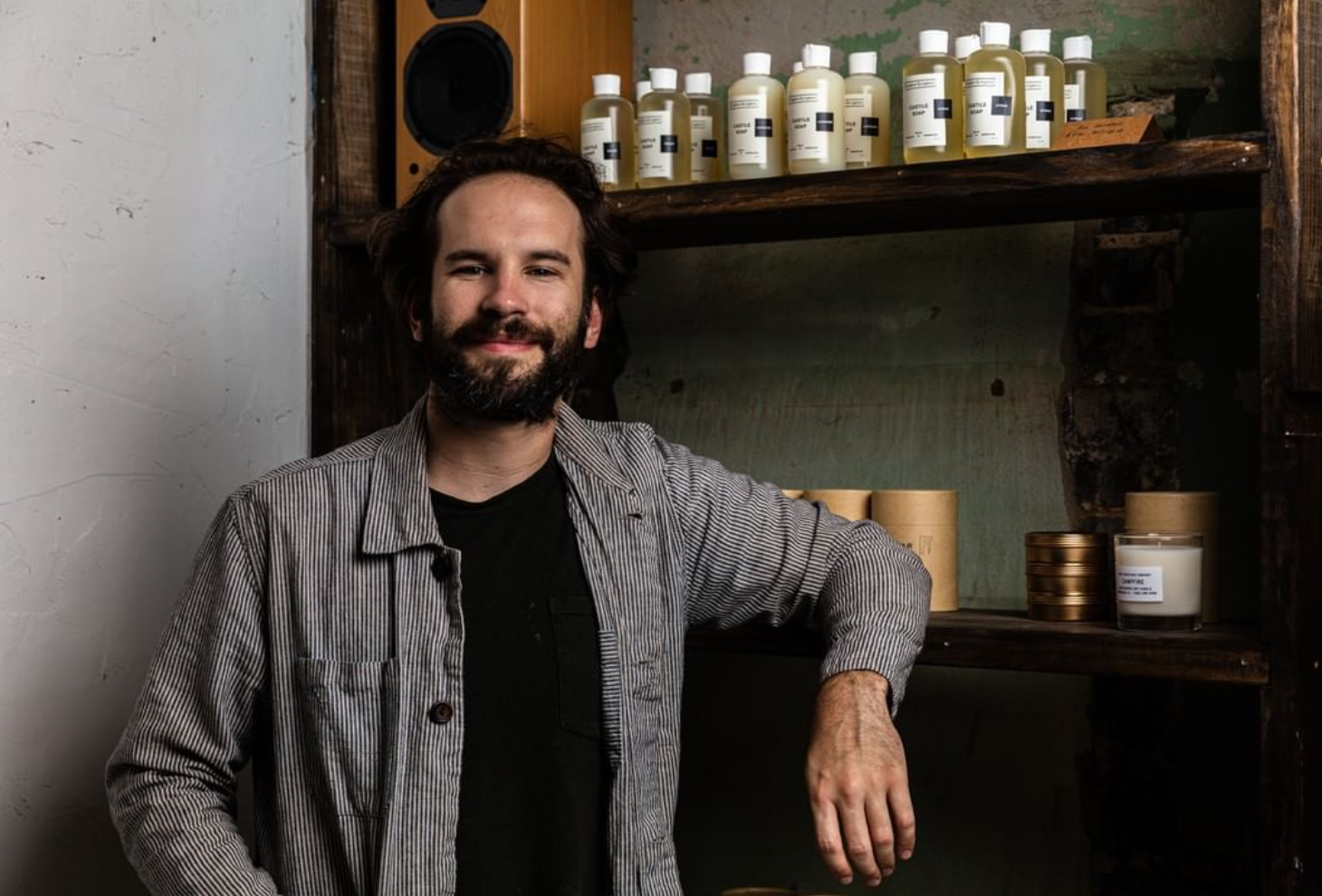
Jake Carnley is thinking of this quarantine as a cocoon for his businesses.
“Really, what we have been doing is using this time as kind of a period to think through it all without the burden of the normal operating workflow,” he said.
The owner of Great Bear Wax Co. and the Bungalow Bungalow retail space in downtown Woodlawn (more specifically, in SocialVenture) and former Upswing vendor is using this time for vision casting but with a plan.
“Instead of focusing solely on surviving this, we’ve shifted to thinking that once this does end, we want to emerge as a lean and mean operation that has a ton of vision and a super clear way to achieve what it is that we want to do and what we want to become,” he said.
Carnley is shifting his focus from having wholesale of his Great Bear Wax Co. Candles being the biggest income driver to creating a streamlined shopping experience for customers in the Bungalow Bungalow storefront. He said he’s working to do that by collaborating with Alabama artists whose creations will be displayed in the shop for a few months at a time.
For Bungalow Bungalow, he’s choosing to turn challenges getting certain ingredients into an opportunity to work with manufacturers. This also opens up the possibility to sell cleaning supplies wholesale or creating a subscription model.
“We’re actually working on getting laundry detergent produced specifically for us,” Carnley said. “I didn’t quite know that this was the direction that Bungalow Bungalow was going to go in when we launched, but this is what seems to make the most sense now.”
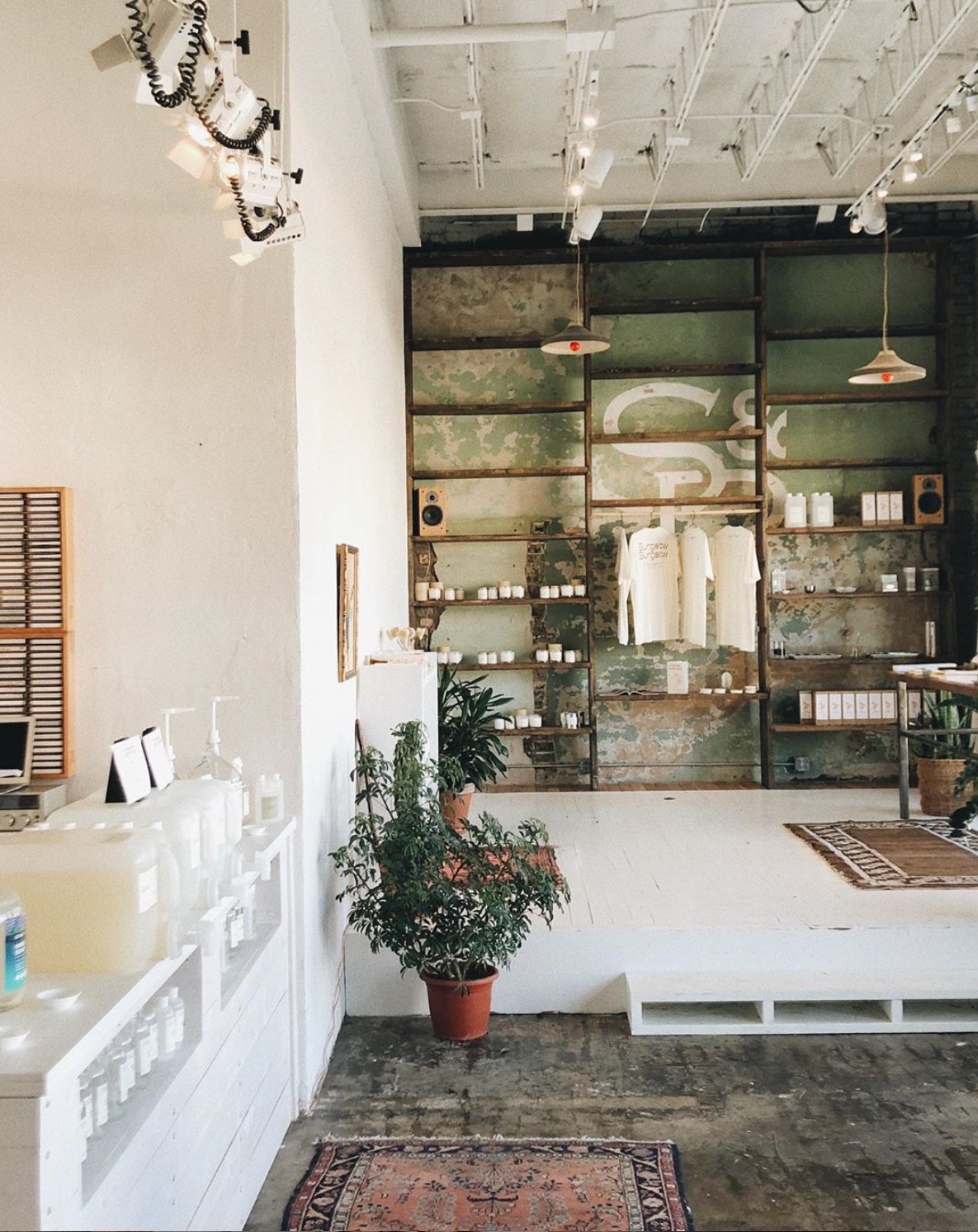
Bungalow Bungalow has invigorated his business in many ways.
“Opening Bungalow Bungalow breathed new life into me as a business owner,” he said. “It breathed a lot of new life into my own creativity and things that I felt got a little bit out of my hands.”
Once he’s able to reopen, he plans on changing some things around to give customers a more curated experience when they walk in the doors.
“We’re going to make some more room for refilled goods,’ he said. “We’re going to be pushing what was the refill counter all the way back to the wall and adding a totally new shelf where we’ll have bath salts and a handful of DIY ingredients—things like oils, beeswax, baking soda, washing soda that people will be able to come in a purchase.”
In the meantime, he’s still brainstorming and leaning on support from the community and from REV.
“REV has made it really easy for us to not totally succumb to fear and panic by allowing for the two months that we won’t be charged rent,” he said. “We’re seeing the community really rally together and support one another. This has turned an abstract idea into a manifestation of what it looks like when a community supports itself.”
REV has been engaged with our partners to ensure we are being as collaborative and clear as possible in messaging to our community the resources available to Birmingham entrepreneurs during the COVID-19 pandemic.
Related News
-
Amplifying Woodlawn: Will Mason on music, business and belonging
Filed Under: Business-Proving, Filling Vacant Spaces, Front Page, Small Business, Woodlawn, Yaysayers
Will Mason’s journey into Woodlawn is more than a story about expanding a business — it’s a testament to the power of music, community and long-term investment in people. In this Q&A, he shares what drew him to Woodlawn and why he believes music is key to building a brighter future for the district.
-
Safeguarding history, one preservation easement at a time
Filed Under: Developer, Front Page, Historic Preservation, Yaysayers
As longtime preservation advocates, we’re also proud to introduce REV’s own Historic Preservation Easement Program, created to help safeguard Birmingham’s irreplaceable architecture while adding long-term value to development projects involving historic properties.
-
Preservation that pays: How historic tax credits can power a downtown revival
Filed Under: Developer, Downtown Birmingham, Front Page, Historic Preservation
For preservation advocates (or “building huggers,” as we like to call ourselves), historic tax credits are essential. They don’t just help save historic buildings — they support local economies, encourage private investment and breathe new life into spaces that shape the identity of our communities.