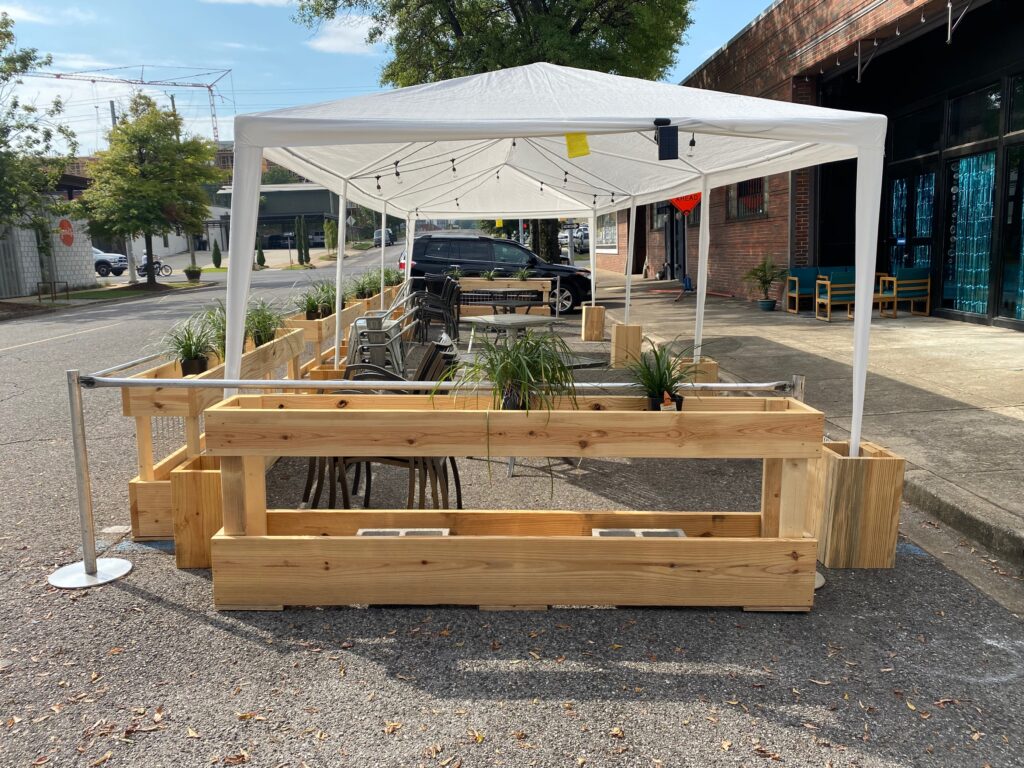
 “Just do it” isn’t just a Nike slogan for Tim Hightower, owner of The Lumbar in Pepper Place. It’s also his philosophy when it comes to expanding outdoor seating.
Hightower says that applying for Birmingham’s Shared Space Permit and building out an outdoor seating area has allowed the bar he co-owns with his daughter, Rylie, to double capacity for less than $1,000.
Watch him explain the process and why he hopes other Birmingham’s businesses take advantage of the permit.
The Lumbar’s Tim Hightower on expanding outdoor seating via Birmingham’s Shared Spaces permit from REV Birmingham on Vimeo.
Need help getting a shared space permit?
The Shared Space Permit is aimed at helping bars and restaurants safely welcome customers back for an on-site dining experience while also maintaining social distancing rules. Click below to see answers to some common questions, and contact REV’s team for help navigating the process for your restaurant!
Related News
-
Amplifying Woodlawn: Will Mason on music, business and belonging
Filed Under: Business-Proving, Filling Vacant Spaces, Front Page, Small Business, Woodlawn, Yaysayers
Will Mason’s journey into Woodlawn is more than a story about expanding a business — it’s a testament to the power of music, community and long-term investment in people. In this Q&A, he shares what drew him to Woodlawn and why he believes music is key to building a brighter future for the district.
-
Safeguarding history, one preservation easement at a time
Filed Under: Developer, Front Page, Historic Preservation, Yaysayers
As longtime preservation advocates, we’re also proud to introduce REV’s own Historic Preservation Easement Program, created to help safeguard Birmingham’s irreplaceable architecture while adding long-term value to development projects involving historic properties.
-
Preservation that pays: How historic tax credits can power a downtown revival
Filed Under: Developer, Downtown Birmingham, Front Page, Historic Preservation
For preservation advocates (or “building huggers,” as we like to call ourselves), historic tax credits are essential. They don’t just help save historic buildings — they support local economies, encourage private investment and breathe new life into spaces that shape the identity of our communities.